
On the mountain
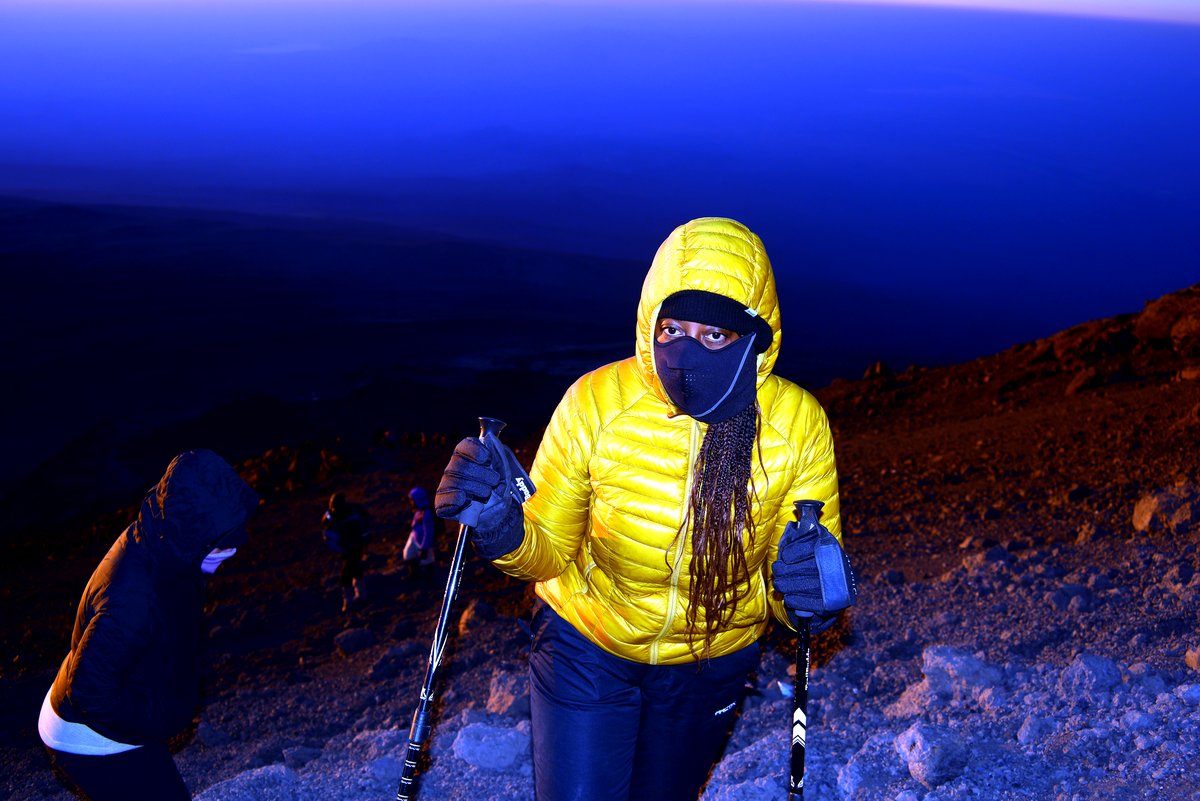
You leave camp around midnight in the cold and walk uphill in the dark for six hours. It is the part people remember and the part nobody adequately prepares them for.
At a glance
- Pre-summit preparation
- Layering
- Pole pole pacing
- Food and hydration
- Summit points
- Safe descent
Summit night commonly begins late in the evening or around midnight, depending on route, conditions and guide strategy. Prepare before resting: organize every layer, fill water containers, fit headlamp batteries, place snacks where they are easy to reach and keep essential medication accessible. The pace is intentionally slow. Short, controlled steps reduce unnecessary energy expenditure while your guide monitors the group. Eat small, easy-to-tolerate snacks and sip fluids regularly; bottles can freeze, so insulation and correct storage matter. Routes reach the crater rim at different points—such as Stella Point or Gilman’s Point—before continuing toward Uhuru Peak where appropriate. Reaching a high point is not a reason to ignore symptoms. After the summit, the team descends substantially, often making the day long and physically demanding. Save energy for the descent and continue following guide instructions.
Nobody is adequately prepared for summit night, partly because most descriptions of it are written to sell trips. This one is written to tell you what the hours actually contain, including the parts that are miserable.
It is the hardest thing most people who climb Kilimanjaro have ever done. It is also the reason they went.
- Start
- ~midnight
- Ascent
- ~1,200 m
- Total day
- 12–15 hrs
- Temperature
- −10 to −20°C
The evening before
You reach high camp — Barafu at 4,673 m on the southern routes, Kibo Hut at 4,700 m on the eastern ones — around lunchtime after a deliberately short day. There is a kit check, an early dinner, and a briefing. You go to bed at about six in the evening.
You will not sleep. Almost nobody does — a combination of altitude, cold, nerves and a camp full of people preparing to leave at midnight. Accept this in advance and it will bother you less. The rest that carries you through the night was banked earlier in the week.
Midnight to 2am — the easy part that feels absurd
Someone wakes you around eleven. There is tea and biscuits you will not want. Getting dressed takes far longer than you expect with cold hands. You start walking at about midnight.
The first two hours are the easiest of the night and the pace feels ridiculous — genuinely slower than you would walk across a room. Do not overtake anybody. The people striding past you at 1am are frequently the people sitting down at 4am.
2am to 4am — where it becomes work
Long switchbacks up loose scree. Your world narrows to the pool of light from your headtorch and the boots of the person ahead. There is no view, no landmark, and no sense of progress.
It is cold enough that water freezes — an unprotected bottle or a bladder hose will be solid. Most people feel some combination of headache, nausea and profound tiredness in here. Mild versions are ordinary. Your guide will ask you the same questions they have asked twice a day all week, and the reason they have been asking is so that tonight they can tell the difference between ordinary misery and something that means going down.
4am to 6am — the long stretch
The hardest part, and it is mental rather than physical. The summit does not appear to get closer. Time stops making sense. This is where people quit, and almost always because of the monotony rather than the mountain.
Things that help: not looking up, counting steps, breaking it into ten-minute pieces, eating something sweet, and the knowledge that it always ends.
Stella Point, and then Uhuru
The sky behind Mawenzi turns grey, then orange, and everything changes at once.
Stella Point at 5,756 m is the crater rim, and the steep part is over. A lot of people cry here and are surprised about it. From Stella it is another forty-five minutes to an hour along the rim to Uhuru Peak at 5,895 m — walked in daylight, with the glaciers on your right and the crater falling away on your left.
You will not stay long. It is cold, the air holds about half the oxygen you are used to, and you have a very long way down. Ten or fifteen minutes is normal. Take the photograph.
The descent, which nobody warns you about
You come down the scree quickly — much of it can be walked in long sliding steps — back to high camp in perhaps two or three hours. Then, after a rest and something to eat, you keep going down to a lower camp.
By the time you stop you will have been moving for twelve to fifteen hours. This is where knees give out, and it is why trekking poles and downhill training earn their place. It is genuinely the part of the day people are least ready for.
Practical things that make a real difference
- Lay everything out before you sleep. Dressing at 11pm in a cold tent is much easier if nothing has to be found.
- Water inside an insulated cover, or in bottles inside your jacket. A frozen bladder hose is the classic summit-night failure.
- Spare headtorch batteries in an inside pocket, kept warm.
- Two pairs of gloves — thin liners for fiddly jobs, insulated mittens over the top.
- Snacks you can eat one-handed without taking gloves off.
- Do not overdress at the start. Sweating in the first hour makes you far colder later.
- Poles, adjusted short for the climb and long for the descent.
The night is won earlier in the week
How summit night goes is decided mostly by the itinerary that got you there. Talk to us about which one gives you the best shot.
More on on the mountain