
Sustainability
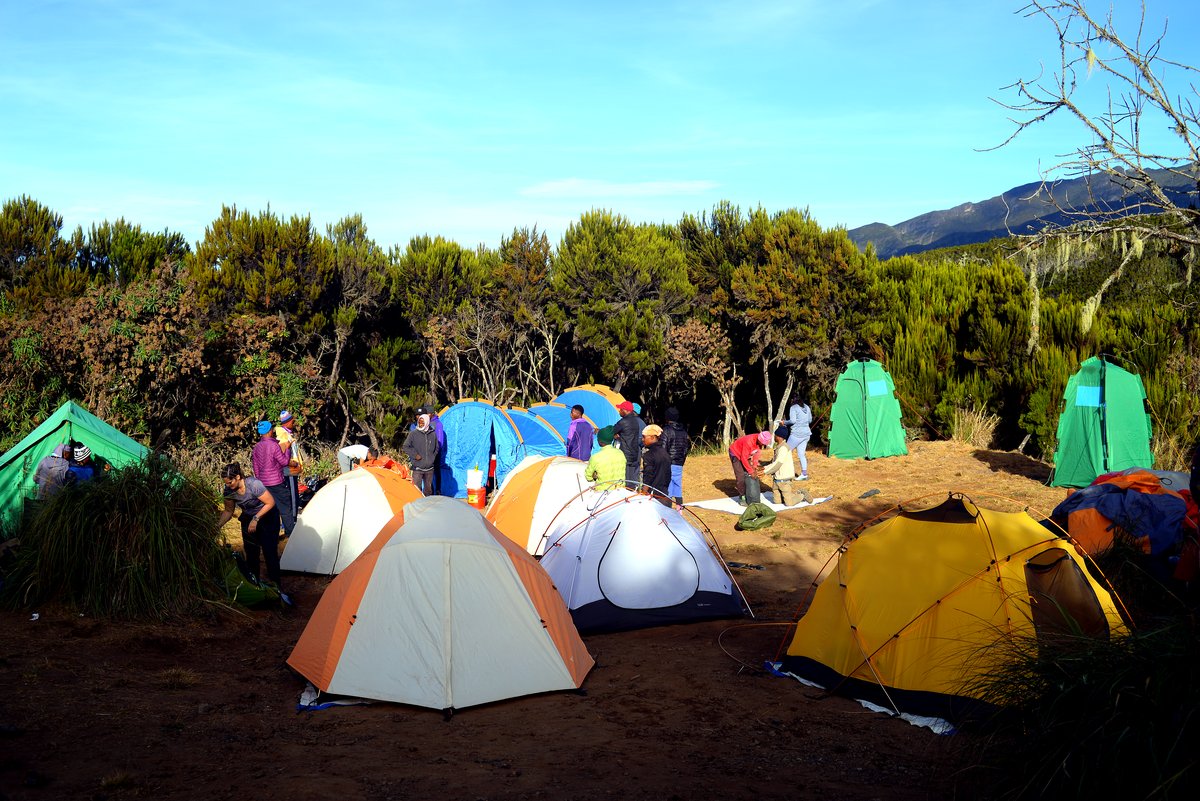
What we do about waste, water and the impact of putting people on a fragile mountain.
At a glance
- Stay on trails
- Waste
- Water and hygiene
- Wildlife
- Crew respect
- Camp etiquette
Kilimanjaro is a protected national park and UNESCO World Heritage landscape. Stay on official trails, use designated camps and follow ranger and guide instructions. Do not remove plants, rocks or other natural objects. Pack out personal waste according to crew instructions. Do not bury wipes, sanitary products or other non-biodegradable material. Use water carefully and keep soaps and personal products away from natural water sources. Never feed or approach wildlife. Responsible trekking also includes human considerations: respect porter load limits, camp routines and crew working spaces. Keep noise controlled, especially at night and during early departures. A successful expedition should leave the mountain with as little evidence of the group’s presence as practical.
Fifty thousand-odd people a year walk up a mountain that has no road, no plumbing above the gates and a fragile alpine ecosystem in the middle of it. Everything you use for a week is carried up, and everything left over has to be carried down again.
Waste
The park requires operators to bring down what they take up, and gate weigh-outs exist to enforce it. In practice the standard varies enormously between companies, and the difference is visible on the ground — most obviously around the busier camps on the popular routes.
The parts that are easiest to get wrong are the small ones: batteries, wet wipes, foil sachets, and human waste at the higher camps where the ground is frozen and the drop toilets are unpleasant enough that people wander off instead.
Water
Water on the upper mountain comes from streams that shrink through the dry season, and camps concentrate hundreds of people around a small number of sources. Purifying and refilling rather than carrying single-use bottles is both the lighter option and the only defensible one; many operators and the park itself now discourage or prohibit disposable plastic bottles above the gates.
Fuel and cooking
Wood fires are prohibited in the park. Cooking is done on gas, which is carried up in cylinders and carried down again.
The people question
Sustainability on Kilimanjaro is not only environmental. The mountain is one of the largest sources of employment in the Kilimanjaro region, and an operation that underpays its crew is not a sustainable one in any meaningful sense of the word. That side of it is covered properly on the porter welfare page.
What we ask of climbers
- Bring a reusable bottle or bladder and treat water rather than buying bottled.
- Take your own rubbish off the mountain, including batteries and anything foil-lined.
- Use the toilets provided, including at night and including when they are horrible.
- Stay on the path. The moorland and alpine desert recover from footfall on a timescale of decades.
- Leave the plants, rocks and everything else exactly where they are.