On the mountain
Barranco at 3,960 m under the wall. Barafu on an exposed ridge at 4,673 m. Each camp has a character, and knowing it in advance takes some of the uncertainty out of the week.
Where you sleep matters more than where you walk, because sleeping altitude is what drives acclimatisation. It is also the part of the week people picture least clearly beforehand.
Every camp on Kilimanjaro is a designated site with a ranger post and a sign-in book. You do not choose where to pitch; the park does.
| Camp | Altitude | Routes | Character |
|---|---|---|---|
| Mti Mkubwa (Big Tree) | 2,785 m | Lemosho, Northern Circuit | In the rainforest. Humid, green, loud with birds. Warm. |
| Machame Camp | 2,835 m | Machame | Forest edge. Busy — the first night of the busiest route. |
| Shira 1 | 3,505 m | Lemosho, Northern Circuit | Western edge of the plateau. Open, exposed, huge skies. |
| Shira 2 | 3,900 m | Lemosho, Machame, Northern Circuit | Open moorland with Kibo directly ahead. Cold, clear nights. |
| Moir Hut | 4,200 m | Northern Circuit | Quiet side valley. One of the emptiest camps on the mountain. |
| Barranco | 3,960 m | Lemosho, Machame, Umbwe | Beneath the Barranco Wall, among giant groundsels. Many climbers' favourite. |
| Karanga | 3,995 m | Southern circuit routes | On a ridge above a valley. Short day in, long afternoon of rest. |
| Barafu | 4,673 m | Southern circuit routes | Bare, exposed ridge. Nobody sleeps well here. Summit night starts from it. |
| Mawenzi Tarn | 4,330 m | Rongai | Beside a small lake under Mawenzi's spires. Spectacular and quiet. |
| Kibo Hut | 4,700 m | Rongai, Marangu | The high camp on the eastern side. Stone huts on Marangu. |
| Mweka | 3,100 m | Most descent routes | Back in the forest. The first warm night in days. |
What a camp is actually like
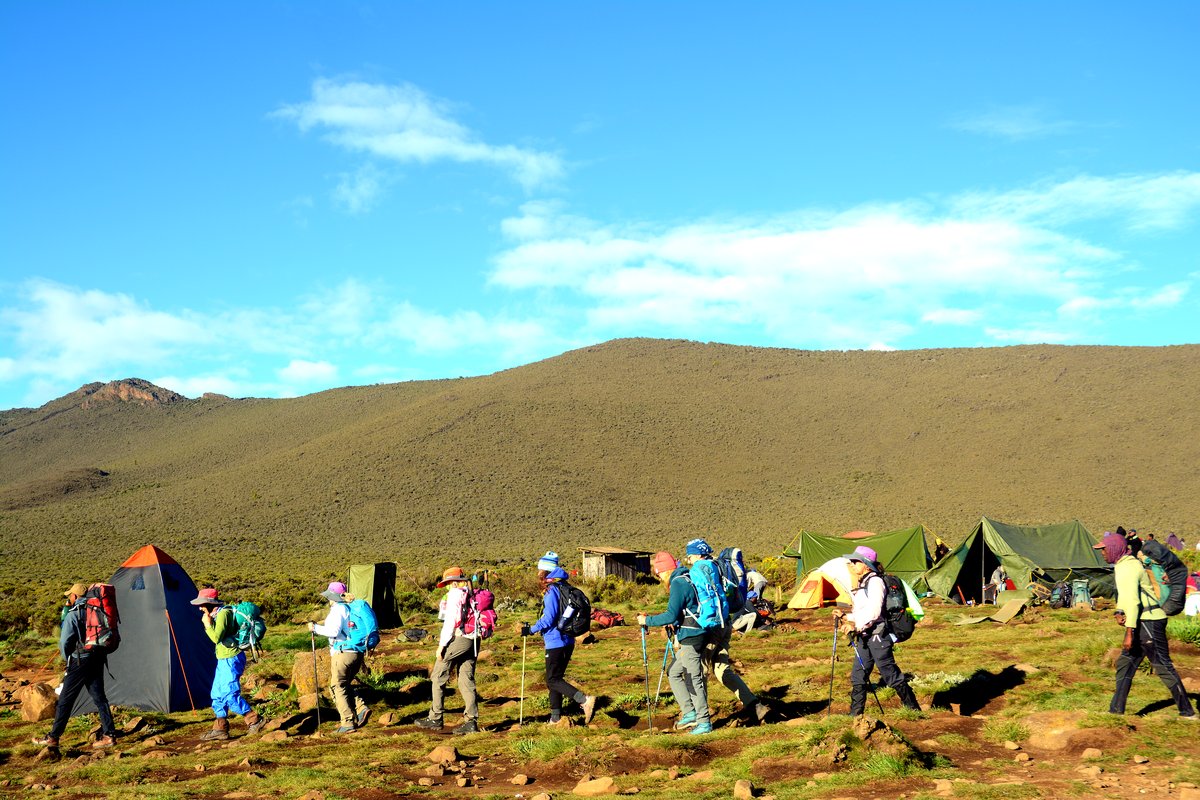
You arrive in the early afternoon on most days. Your tent is already pitched — the porters go ahead. There is usually washing water, then a hot drink and something to eat in the mess tent, then several hours of nothing much before dinner.
That empty afternoon is deliberate. It is rest, and it is when a great deal of the acclimatisation is happening. Bring a book.
Camps at altitude are cold as soon as the sun goes. Most people are in their sleeping bag by eight o'clock, partly for warmth and partly because there is nothing else to do.
Huts versus tents
Only Marangu has huts — shared dormitory buildings with bunks, mattresses and a communal dining hall. Every other route camps.
Huts are drier and warmer, which matters in the wet season. They are also shared with strangers, can be full in high season, and mean Marangu's weaker acclimatisation profile comes as part of the package. Choose Marangu for the huts if you want them, not because it is easier.
Crowding
Camps on the southern circuit — Barranco, Karanga, Barafu — are shared by everyone on Lemosho, Machame and Umbwe. In August that means a lot of tents. The northern and western camps are dramatically quieter.
If solitude matters to you, the camps are the reason to look at the Northern Circuit or Rongai rather than the reason to look at the trail.
See where each route sleeps
Every route page lists its camps with altitudes, and the elevation profile shows the shape of the whole week.
More on on the mountain