
Timing
Full moon Kilimanjaro climbs
Summit night under a full moon, with the glaciers lit from above.
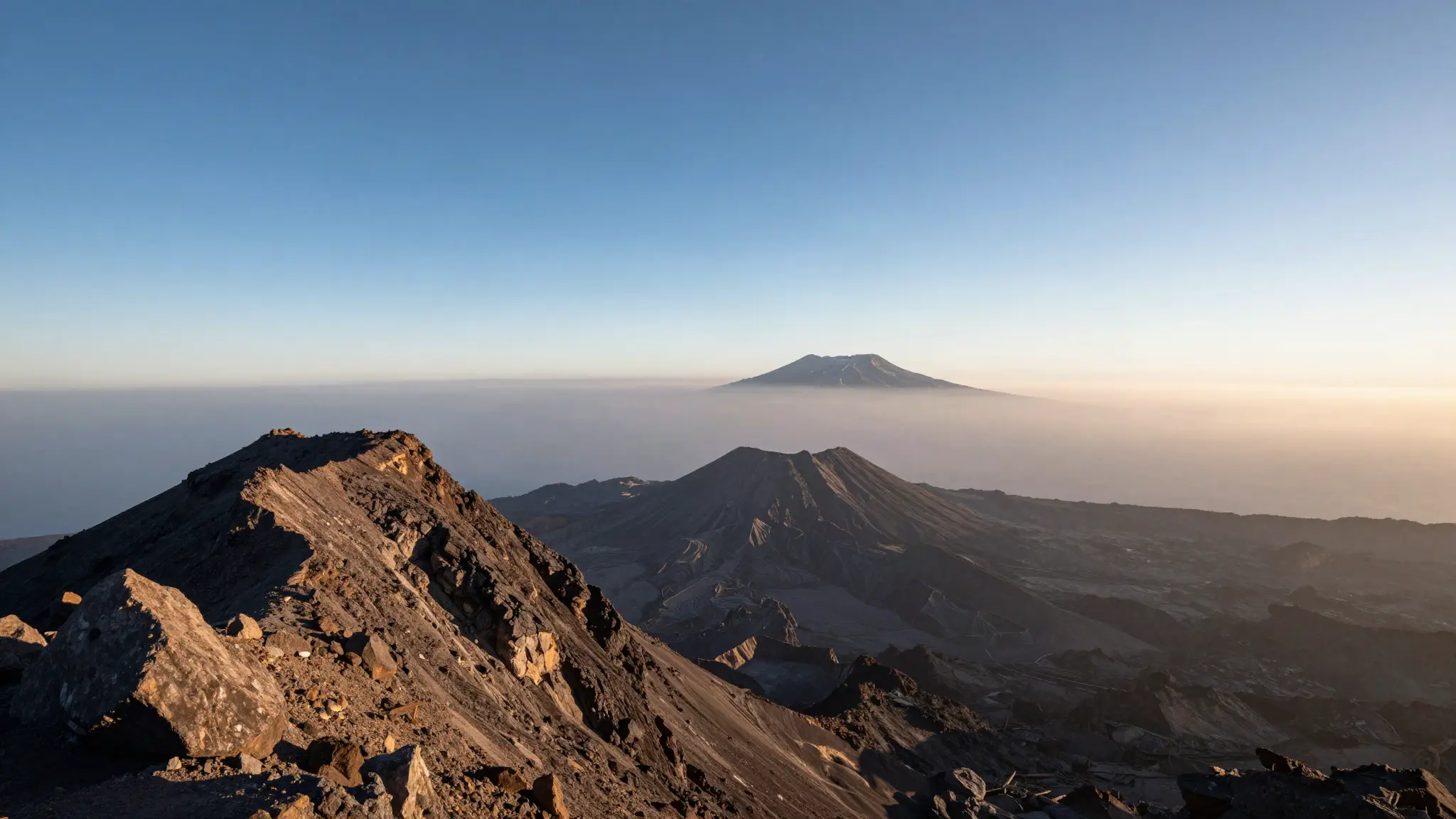
Timing an itinerary so that summit night falls on or near a full moon means walking the final ascent with the route visible ahead of you rather than in a headtorch beam. It changes the character of the night considerably, and it needs to be planned around months in advance.
Summit night begins around midnight and most of it is walked in the dark, in the small circle of light from a headtorch. On a full moon it is walked in silver light, with the route visible ahead of you and the glaciers lit from above when you reach the crater rim.
It changes the character of the night considerably. It also needs planning months ahead, because the moon does not move for your annual leave.
What actually changes
- You can see where you are going. The switchbacks above Barafu are visible as a route rather than as the next three metres.
- The landscape appears. The crater, the glaciers and the plain far below are all visible instead of black.
- It is psychologically easier. The hardest part of summit night is the monotony of moving through darkness with no sense of progress. Being able to see the ridge line ahead helps more than people expect.
- Photographs actually work.
What does not change
It is exactly as cold, exactly as steep and exactly as high. A full moon makes summit night more beautiful and slightly less bleak. It does not make it easier in any physical sense, and it does not affect altitude at all.
The trade-offs
- Full-moon dates are popular, so the mountain is busier and the camps fuller.
- Prices are sometimes higher for those departures.
- You lose the stars. A moonless summit night at 5,000 m, well away from any light pollution, has a sky most people have never seen. Some climbers prefer that trade.
- The dates drive everything. Your whole trip has to be built backwards from one night.
How to plan it
Work backwards. Identify the full moon date, then count back through the itinerary to find your start date, then book flights around that. On an eight-day climb summit night falls on day seven, so the climb typically starts six days before the full moon.
Aim for the day of the full moon or the two days either side — the moon is effectively full for a few nights and the flexibility helps with availability.
Find a full moon date that works
Tell us roughly when you can travel and we will find the full-moon dates that fit — and tell you if the itinerary compromise is not worth it.