
Safety
What summit night is actually like
Midnight to sunrise, honestly described.
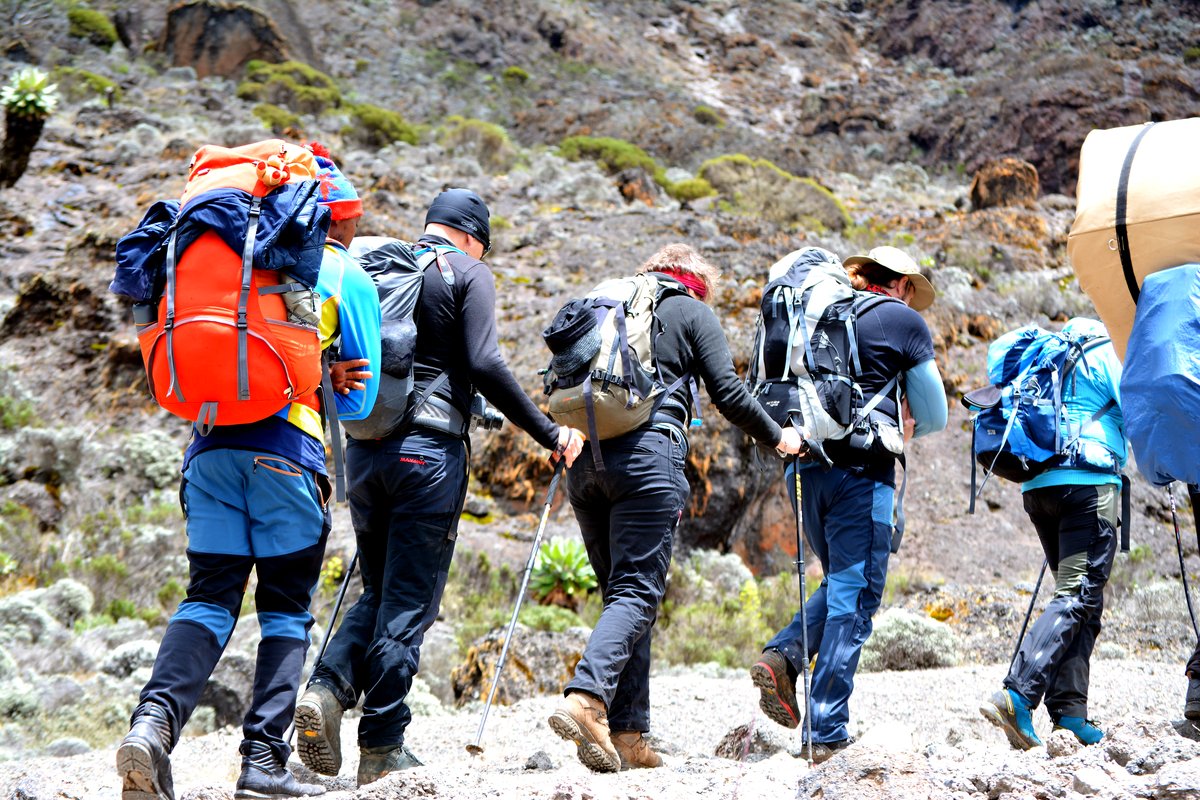
Nobody is adequately prepared for summit night, partly because most descriptions of it are written to sell trips. Here is what the six hours actually contain.
You go to bed at Barafu at about six in the evening, on a ridge of bare volcanic rock at 4,673 m, and you do not sleep. Almost nobody does. Accept that in advance and it will bother you less.
Midnight to two
Someone wakes you around eleven. There is tea and biscuits you will not want. You put on every layer you own, which takes longer than you expect with cold hands, and you start walking into the dark at about midnight.
The first two hours are the easiest and they feel absurd. The pace is glacially slow — genuinely slower than you would walk across a room. Resist the urge to overtake anyone. The people moving faster than you at one in the morning are frequently the people sitting down at four.
Two to four
This is where it becomes work. The route is a long series of switchbacks up scree. Your world narrows to the pool of light from your headtorch and the boots of the person in front. It is cold enough that water in an unprotected bottle will freeze; keep it inside a jacket or use an insulated cover.
Most people feel some combination of headache, nausea and profound tiredness somewhere in here. Mild versions of these are common and are not, in themselves, a reason to stop. Your guide will ask you the same questions they have asked every morning and evening for a week, and the reason they have been asking is so that tonight they can tell the difference between ordinary misery and something that means going down.
Four to six
The longest stretch. There is no view yet, no landmark, and the summit does not appear to get closer. This is the part where people quit, and it is almost always mental rather than physical.
Then the sky behind Mawenzi starts to go grey, and then orange, and everything changes.
Stella Point to Uhuru
Stella Point, at 5,756 m, is the crater rim. The steep part is over. Many people cry here; some of them are quite surprised about it. From Stella it is another forty-five minutes to an hour along the rim to Uhuru Peak, walked in daylight, with the glaciers on your right and the curve of the earth visible from the edge of the crater.
You will not stay long. It is cold, the air holds about half the oxygen you are used to, and you still have a very long descent. Ten or fifteen minutes is normal.
What happens if you cannot continue
You go down, with a guide, and the rest of the group carries on. This is planned for and staffed for; it does not ruin anyone else's night. Turning around is a decision your lead guide can make for you and it is not negotiable, which is exactly what an experienced guide is for.
This article is informational and is not medical advice. If you have a health condition, or you have had altitude sickness before, speak to a doctor with altitude experience well before you travel.